
The role of building codes in ensuring public safety
March 30, 2023
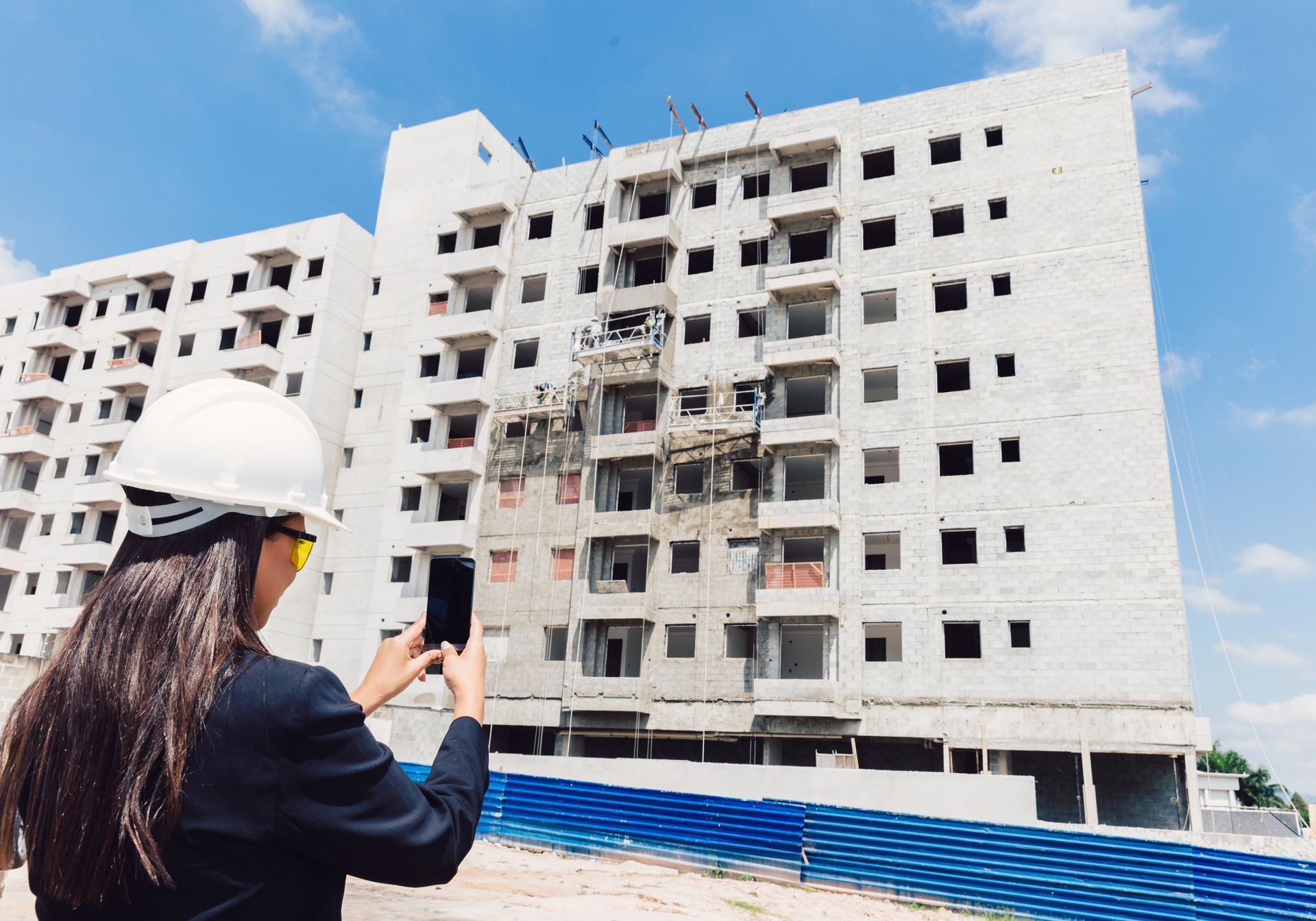
A woman is taking a picture of a building under construction.

Public safety is a priority. Building codes provide architects, builders, engineers, and other subcontractors involved in construction projects with guidelines to meet regulations and secure structures. It is essential for a building subcontractor to stay up-to-date on the latest regulations and policies. Building codes regulate construction and design to ensure buildings uphold safety, health, accessibility, and sustainability requirements set by local authorities. These include building materials and design, fire safety measures, ventilation systems, plumbing systems, and electrical systems.


Structural Safety

The Building Codes Save study found that adopting modern building codes can reduce losses from natural disasters by over $132 billion across the US, with commercial building services providing greater levels of structural safety. This number is projected to grow until 2040, but there is still a need for greater adoption in areas prone to floods, earthquakes, and hurricanes. With United Seattle's expertise in building codes and regulations, we can help reduce these risks.


Fire Safety

Building codes ensure that buildings meet the required fire safety standards, including using fire-resistant materials and installing sprinkler systems and smoke detectors. Following building codes is imperative, highlighted by the tragic London high-rise fire of 2017, in which 72 people perished despite local regulations mandating sprinklers' installation (but not actual implementation). Our team of experts at United Seattle, as an expert building subcontractor, will ensure that your building meets these requirements.


Energy Efficiency

Building codes are key to energy efficiencies, such as insulation and high-efficiency lighting for building construction subcontractors and updated HVAC requirements. Energy-efficient lighting has become more common due to increased regulation. Compliance with these codes can be ensured through local building inspections, along with builder and property owner education and training programs for greater awareness of best practice measures. Updated building codes in the US led to 18.5% energy savings from 2007-2010.


Accessibility

A building subcontractor must operate under the standards set by building codes that include requirements such as accessible entrances, ramps, and elevators to ensure effective accessibility for people with disabilities. An exemplary case of enhanced accessibility is seen through the Americans with Disabilities Act (ADA), which has established benchmarks for public spaces and buildings. To assure compliance with these codes, local building departments carry out regular inspection services while training programs are implemented to educate property owners and builders alike.


Health and Sanitation

Building codes are essential in ensuring public safety and addressing health and sanitation concerns. Evidencing their importance, construction code improvements have been proven to reduce fall-related injuries, making public health advocates a key ally in strengthening these requirements. Owners, operators, and those involved in building design, construction, and maintenance, must work closely with local building departments and health officials to comply with all health and sanitation building codes. Construction subcontracting services must be involved in this process to succeed.


Building Subcontractor Delivering Safety, Sustainability, and Quality

United Seattle, the leading building subcontractor committed to prioritizing safety and sustainability in all construction projects. Our team of experts has the knowledge and experience to ensure that your project meets all building codes and regulations, from design to completion.Trust us to deliver the highest quality standards and work with you every step of the way. Contact us today to learn more about our services and how we can help make your construction project successful.



By Viktor Zherdiev • October 15, 2026
Change orders are one of the most common disputes between a commercial subcontractor Seattle and a General Contractor (GC). People think that the commercial construction subcontractor Seattle is a middleman between the client and the GC, whereas in actuality the GC is the real middleman. They have to coordinate between the design requirements and different multi-trade commercial subcontractor Seattle. Everything is smooth once the deadlines are being met with no additional cost added on. However, once a change order is commissioned, the real mind-bending games start for the GC. One practical way to reduce change orders in commercial construction is to standardize scopes across multiple trades. Once all deliverables are clearly defined and a building subcontractor Washington is chosen based on multi-trade specialty, the risk of dispute during a change order reduces significantly. We look how this one strategic move at the start of the project saves a GC from loss of money, time as well as easy project completion. How Standardized Multi-Trade Scopes Reduce Ambiguity Change orders are not always a design or research flaw. They are often the result of different construction management subcontractors interpreting the design and timeline in their own way. Since the project is an addition of multiple tasks, the timelines often overlap. This means that one commercial subcontractor Seattle, starts once the other finishes their job. This creates havoc in the overall project and risk management section of the project for the GC. This is where a multi-trade subcontractor like United Seattle comes into play. The GC avoids problems like extra cost, time and approvals. Some of the preventable sources of change orders include:- Scope gaps Overlapping responsibilities Unclear handoffs Inconsistent documentation Unidentified project requirements These issues can become particularly costly on larger projects involving multiple buildings, floors, or construction phases.  The Value of One Multi-Trade Subcontracting Partner Coordination between multiple single-specialty subcontractors not only creates change-order risk. It also adds an additional task of cross-coordination between all of them. Each commercial subcontractor Seattle may have a different process to complete their tasks, which creates havoc in the overall project timeline. A multi-trade subcontracting partner like United Seattle can simplify this process by coordinating related scopes through a more consistent approach. Another approach is dividing different scopes that have similar timelines. For example, exterior and interior can be treated differently, as their timelines are totally different from each other. Combining roofing , siding, and window installation under one coordinated subcontracting package can help address exterior transitions before construction begins. Even small scope misunderstandings can affect multiple units or construction phases, which increases the value of a single multi-trade subcontracting partner.
By Victor K • October 8, 2026
All commercial projects depend heavily on coordination between the general contractor and the commercial subcontractor in Seattle. However, there are many aspects of the coordination that GCs miss out on, which directly results in project delays and disputes. Each task separately presents a different challenge for both parties. Therefore, the commercial construction subcontractor Seattle requires specialization in any aspect they are picked for. Once the trades operate independently and without cohesion, they provide a massive challenge for the GC. Working with an experienced design-build contractor like United Seattle can ease most of the problems that a GC can face over the period of the project. By bringing design coordination and trade-specific expertise together early, a subcontractor can help general contractors identify potential conflicts, streamline installation, and reduce uncertainty across the exterior envelope scope. Understanding the basics lets a GC stay on top of the project and make a meaningful difference in the delivery timelines and cost. What Does Design-Build Mean at the Subcontractor Level? Design-build in Seattle is often defined as one commercial subcontractor Seattle providing all the required services. However, these services can come in packages once the project is large in size and capacity. It is practically impossible for one building subcontractor Washington to have expertise in all departments, and this is where packaged delays come into play. The GC has to be careful that these combined packages are made in such a way that the tasks are cross-linked so delays can be avoided through proper workflows. For example, the exterior works like roofing, siding , windows, and waterproofing can be done through one commercial construction subcontractor Seattle, whereas the interior including ceiling, flooring , bathroom and kitchen renovation can be through another. The best way to go about it for a GC is to delegate design responsibilities to the respective construction management subcontractor. This approach offers access to specialized expertise without requiring the general contractor to coordinate every technical detail between separate exterior trades independently. Why Early Subcontractor Involvement Matters Many GCs make a common mistake of getting the design done and then involving the commercial subcontractor Seattle. This often leads to design and capability conflicts for both parties. It also helps in maintaining linear timelines so one trade is ready to start their job once the previous team is in its final stages of work. This is easily done once one commercial construction subcontractor Seattle provides the majority of the trade tasks. If the issues are discovered mid-project, they can easily lead to delays in the project as well as disputes that put the whole project on hold. The commercial construction subcontractor Seattle loses money, whereas the GC loses credibility for the future.
By Victor K • September 22, 2026
General contractors or GC often look out for a complete package in their commercial subcontractor Seattle. The enormous task of combining multiple commercial construction subcontractor Seattle for a single project is a recipe for disaster and all GCs know this well. However, when it comes to selecting that one, the cost bid must not be the only criterion. The lowest bid might not have the overall expertise that is required for the project. GCs can bundle all the tasks and award them to one construction management subcontractor. However, the cost comparison between a single commercial subcontractor Seattle or multiple ones is not linear as lower coordination costs, fewer scope gaps, and better schedule control must also be taken into account. Total Installed Cost Vs. Trade Pricing In simple mathematical terms, the total project cost is just the amount the commercial subcontractor Seattle charges the GC. However, factors like Trade bid price, coordination cost, schedule exposure and change-order exposure must also be taken into account while pricing for a singular or multiple construction management subcontractors. The GC can simply request a quote for each task, generate competition and get the lower cost. However, the factors listed account for additional cost in this scenario as the GC needs to coordinate multiple contracts, schedules, site mobilizations, foremen, RFIs, submittals, invoices, inspections, and handoffs. A single-source commercial subcontractor Seattle like United Seattle may cost more than a competitive breakdown of subtasks but the additional factors are eliminated and long-term cost and time savings are achieved. Schedule Float Vs. Small Bid Difference Multiple tasks have multiple timelines which are often linear rather than parallel. This means that one commercial construction subcontractor Seattle needs to wait for the other one to complete their task before starting. An ideal example of this is flooring and drywall installation. One cannot be done before the first task is completed. A delay in the earlier task can lead to delays, extra cost and rising disputes, all of which have a price tag that the GC has to pay. Therefore, calculations are to be carried out before using multiple contractors rather than one. For example, if a bundled subcontractor costs $30,000 more than the combined lowest trade bids but gives the project team additional schedule flexibility and reduces the likelihood of a costly sequencing delay, that $30,000 should not be evaluated in isolation.
More Posts

We Offer All the Services You Need in One Place! We Will Save You Time and Money!

Call Us at (425) 332-8088 Now to Get a Free Estimate or a Free Consultation for Any of Our Services!

Contact Us